25 Mar
Last updated: March 25, 2026
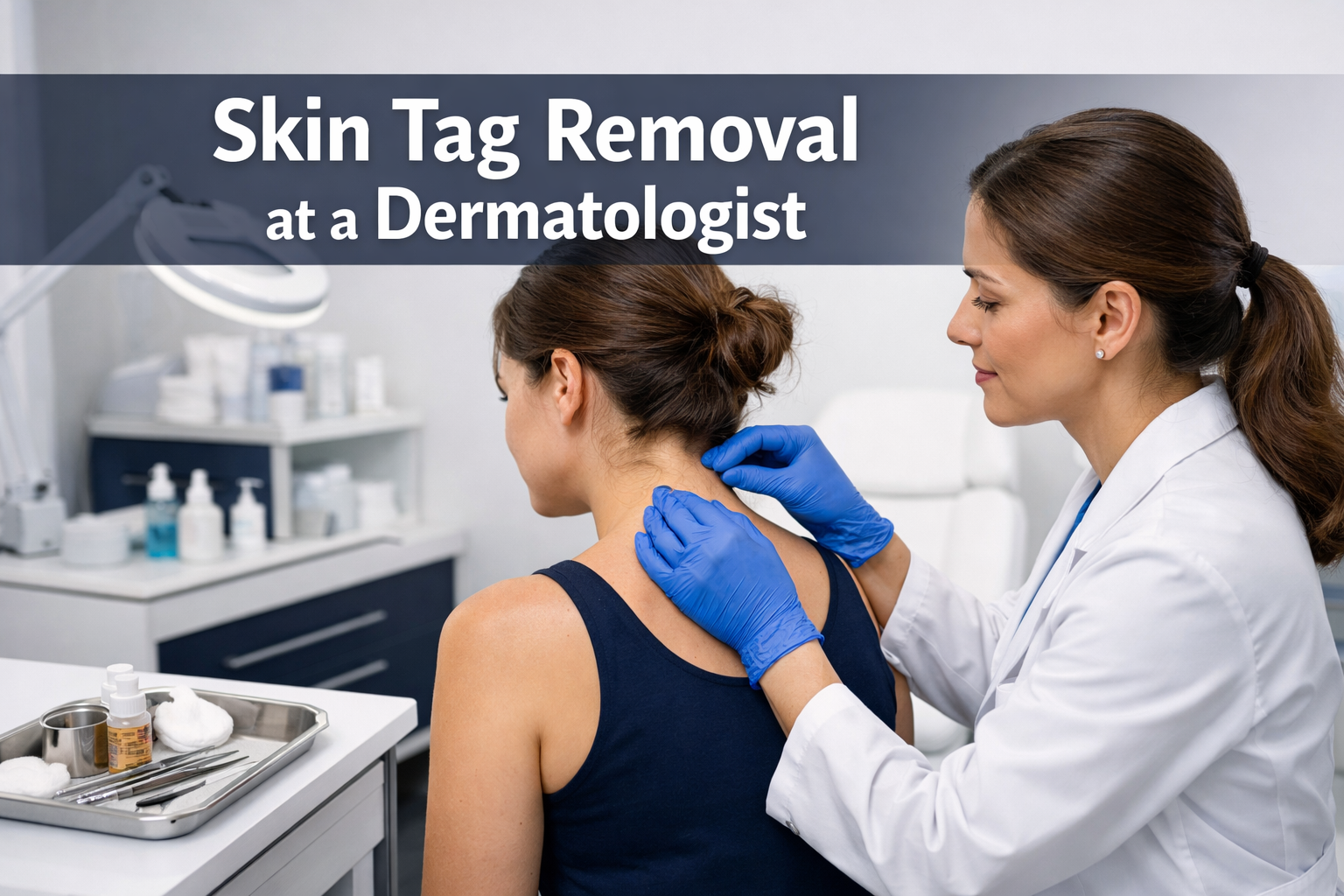
Quick Answer: Skin tag removal at a dermatologist is a safe, in-office procedure that typically takes under 30 minutes. A trained physician removes the tag using excision, cryotherapy, or cauterization — usually with local anesthetic — and you go home the same day. It’s the most reliable option for complete, clean removal, especially for tags in sensitive areas or when you want a professional assessment of the lesion.
Key Takeaways
- Skin tags (acrochordons) are benign, soft skin growths — they’re not cancerous, but they can be irritating or cosmetically bothersome.
- Roughly 46% of people develop skin tags at some point in their lifetime, and most people with them have multiple lesions [1].
- Dermatologists and minor surgery clinics remove skin tags using three main methods: excision (cutting), cryotherapy (freezing), and cauterization (burning).
- Most procedures take 15–30 minutes and involve minimal downtime.
- In Canada, cosmetic skin tag removal is typically not covered by provincial health insurance — expect to pay out of pocket.
- Average removal costs range from $150–$300 for up to 15 tags, with additional fees for larger quantities [4].
- At-home removal methods carry real risks: infection, scarring, and incomplete removal.
- A professional assessment matters — not every bump is a skin tag. Some lesions need to be ruled out for more serious conditions.
What Is a Skin Tag and Why Do People Get Them?
A skin tag is a small, soft flap of skin that hangs off the body on a thin stalk called a peduncle. They’re medically known as acrochordons and are completely benign. They don’t turn into cancer, and they don’t spread.
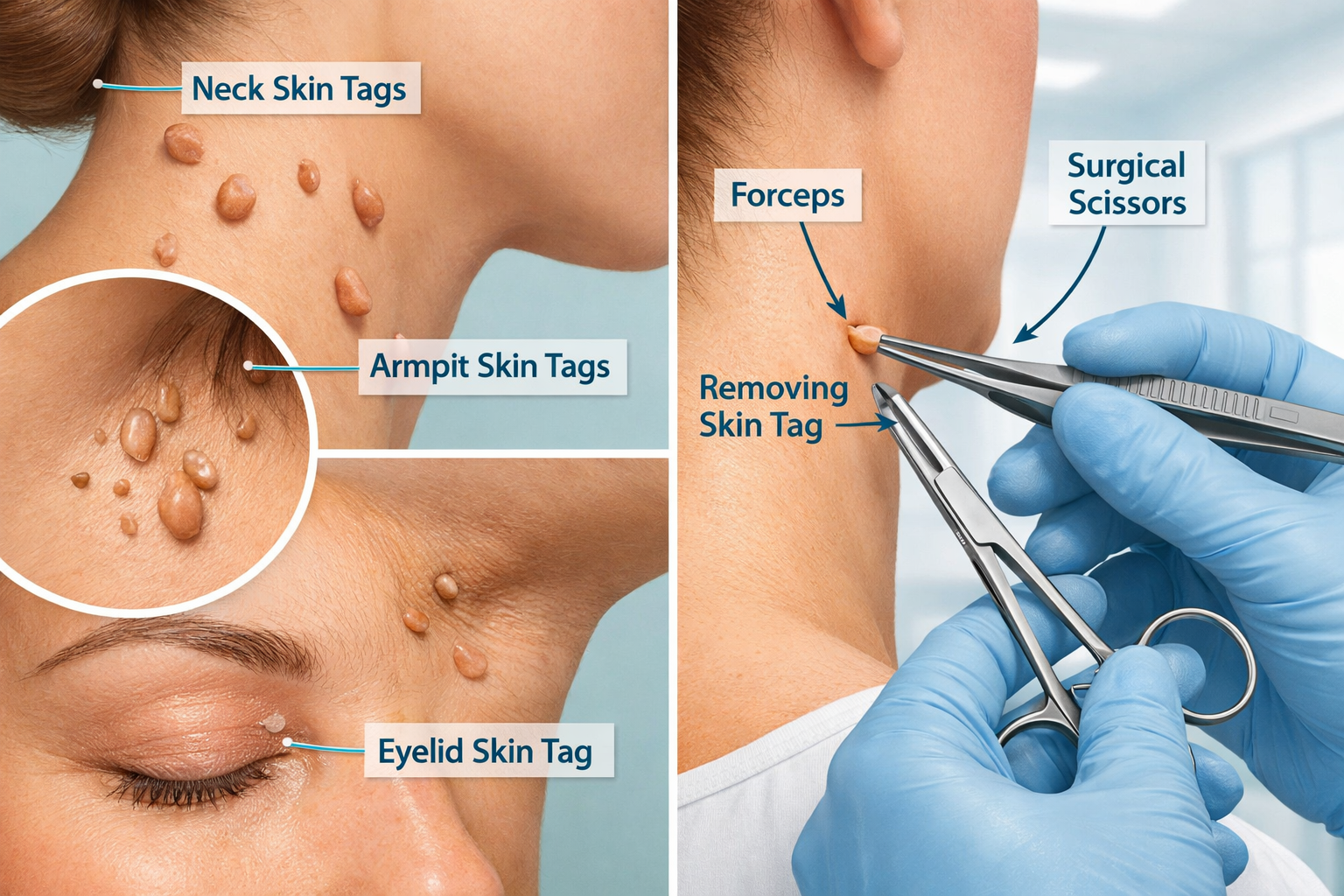
They tend to appear where skin rubs against skin or clothing — the neck, underarms, groin, eyelids, and under the breasts are the most common spots. Friction is the main trigger, which is why they’re more common in people who are overweight, pregnant, or have diabetes.
Genetics also play a role. If your parents had them, there’s a reasonable chance you will too.
Approximately 46% of the population experiences skin tags at some point [1], and research shows that 83.3% of people with skin tags have more than one [2]. So if you’ve noticed a cluster, you’re far from alone.
When Should You See a Dermatologist for Skin Tag Removal?
You should see a dermatologist (or a qualified minor surgery clinic) for skin tag removal if the tag is causing symptoms, is in a sensitive location, or you’re simply not sure what you’re looking at.
See a professional if:
- The growth is bleeding, changing shape, or changing colour
- It’s located near the eye, on the eyelid, or in the genital area
- You have multiple tags and want them all addressed in one visit
- You’ve tried an at-home method and it didn’t work — or caused irritation
- You want the lesion assessed to confirm it’s actually a skin tag and not something else (like a wart, mole, or seborrheic keratosis)
That last point is worth emphasizing. Not every small growth is a skin tag. A dermatologist or surgeon can examine the lesion and give you a clear answer before any treatment begins. For a broader look at different types of skin growths, our guide to 25+ types of skin lesions is a useful starting point.
You can likely wait if:
- The tag is very small, not bothering you, and hasn’t changed
- You’re comfortable monitoring it at home
That said, removal is simple and quick — there’s rarely a reason to put it off if it’s affecting your comfort or confidence.
What Methods Does a Dermatologist Use for Skin Tag Removal?
Dermatologists use three primary methods for skin tag removal: excision, cryotherapy, and cauterization. The right choice depends on the tag’s size, location, and your skin type.
Excision (Surgical Cutting)
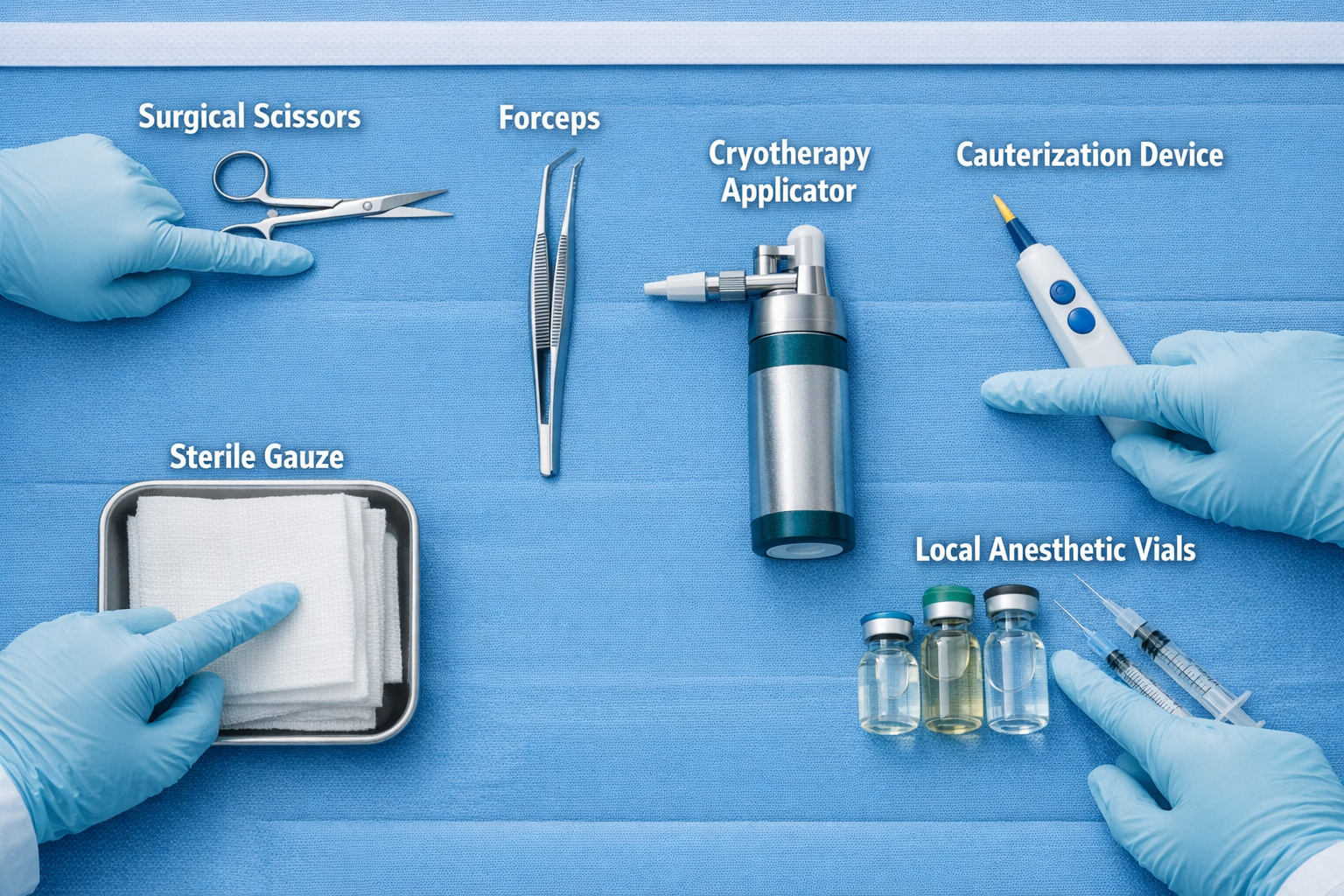
The most straightforward method. The physician numbs the area with a local anesthetic, then uses sterile surgical scissors or a scalpel to snip the tag off at its base. It’s quick, precise, and works for tags of any size.
This is the most common approach used at minor surgery clinics. It produces a clean result with minimal tissue damage.
Cryotherapy (Freezing)
Liquid nitrogen is applied to the tag, freezing the tissue. The tag dies and falls off within a few days to two weeks. It’s effective but can cause temporary skin discoloration, especially on darker skin tones.
Some cryo-based devices have been cleared for over-the-counter use [7], but the professional version is more controlled and precise.
Cauterization (Burning)
An electrosurgical device uses heat to burn off the tag and seal the surrounding tissue simultaneously. It minimizes bleeding and works well for smaller tags. It may not be suitable for tags near the eyes.
Quick comparison:
| Method | How It Works | Healing Time | Best For |
|---|---|---|---|
| Excision | Cut at the stalk | 1–2 weeks | All sizes, any location |
| Cryotherapy | Freeze with liquid nitrogen | 1–2 weeks | Small to medium tags |
| Cauterization | Heat/electrical current | 1–2 weeks | Small tags, minimal bleeding |
All three methods are performed in an office setting under local anesthetic. For a deeper comparison of removal approaches, see our article on skin tag removal methods.
What Happens During Skin Tag Removal at a Dermatologist’s Office?
Skin tag removal at a dermatologist or minor surgery clinic follows a predictable, straightforward process. Here’s what to expect from start to finish.
Step 1: Consultation
The physician examines the tag (or tags), confirms the diagnosis, and recommends a removal method. This is also when you discuss how many tags you want removed and whether any need pathological analysis.
Step 2: Preparation
The area is cleaned with an antiseptic solution. A local anesthetic (usually lidocaine) is injected or applied topically to numb the skin. Most patients feel a brief sting from the needle — after that, the area is numb.
Step 3: Removal
Depending on the method chosen, the physician removes the tag in seconds to a few minutes. Multiple tags can often be treated in a single visit.
Step 4: Post-procedure care
A small bandage is applied. The physician gives you aftercare instructions — typically keeping the area clean and dry, avoiding picking at the site, and watching for signs of infection.
Step 5: You go home
There’s no hospital stay, no general anesthesia, and no significant recovery period. Most people return to their normal routine the same day.
“Think of it like resetting the clock on this discomfort — the whole thing is done before you’ve had time to worry about it.”
The entire visit, including consultation, usually takes under 45 minutes. The removal itself is often 15 minutes or less.
How Much Does Skin Tag Removal at a Dermatologist Cost?
Cost is one of the most common questions — and the honest answer is: it depends on how many tags you have and where you’re located.
Based on available data [4]:
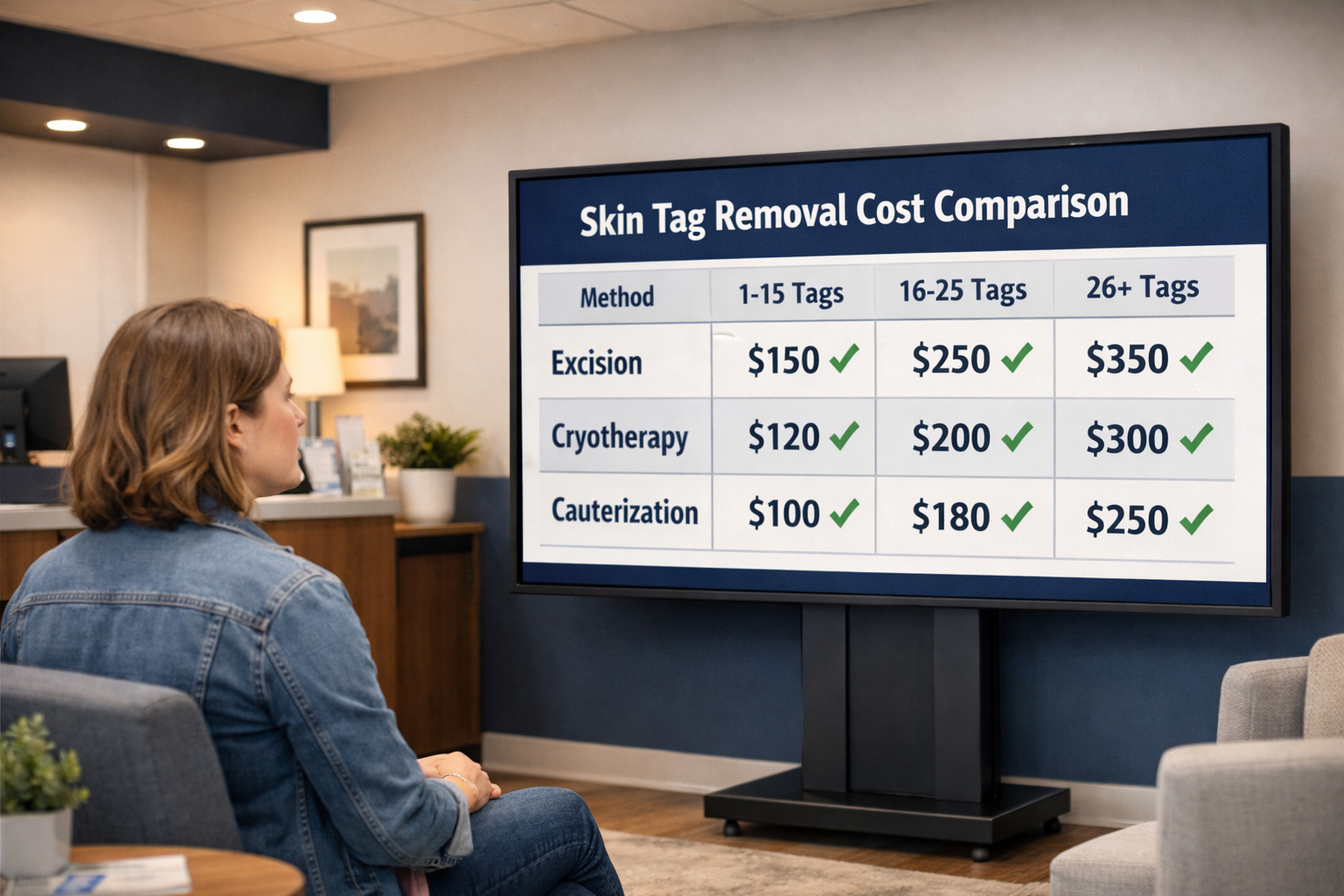
- 1–15 tags: $150–$300 on average
- 16–25 tags: $300–$500
- 26+ tags: $500–$600 or more
- Additional 10 tags beyond the base: $100–$200 extra
- Pathology fees (if the removed tissue is sent for analysis): $50–$200 or more
Costs tend to be higher in major urban centres [4] — Toronto included. If you’re comparing clinics, make sure you’re comparing apples to apples: does the quoted price include the consultation? The anesthetic? Pathology if needed?
Is it covered by insurance?
In most cases, no. Provincial health plans in Ontario (and most Canadian provinces) do not cover cosmetic skin tag removal. If the tag is causing a documented medical problem — repeated bleeding, significant irritation from clothing — there may be a case for coverage, but this is the exception rather than the rule [4].
It’s worth calling your private insurer if you have extended health benefits. Some plans offer partial coverage for minor surgical procedures.
Choose a clinic, not a price:
The cheapest option isn’t always the best one. A qualified surgeon, proper sterile technique, and a clear aftercare plan are worth paying for. An infection or scarring from a botched removal costs more to fix than the original procedure.
Is Skin Tag Removal at a Dermatologist Safe?
Yes — when performed by a trained professional in a clinical setting, skin tag removal is very safe. Complications are uncommon and typically minor.
Possible (but rare) side effects include:
- Temporary redness or swelling at the site
- Minor bleeding during the procedure
- Small scar (more likely with larger tags or certain skin types)
- Skin discoloration, particularly with cryotherapy on darker skin tones
- Infection (rare when proper sterile technique is used)
The risk profile changes significantly with at-home methods. Tying off tags with string, using OTC freezing kits, or applying caustic substances can lead to incomplete removal, infection, and scarring. Our article on DIY skin tag removal covers the risks in detail.
Edge case to know: If a removed tag is sent to pathology and the results come back unexpected, your physician will follow up. This is rare — skin tags are almost always benign — but it’s one reason professional removal has an advantage over doing it yourself.
How to Choose the Right Clinic for Skin Tag Removal
Not all clinics are equal. Here’s what to look for when choosing where to have your skin tags removed.
Look for:
- Board-certified surgeons or licensed dermatologists performing the procedure (not just aestheticians)
- A clean, properly equipped clinical environment
- Transparent pricing with no hidden fees
- A consultation process — any reputable clinic will assess the lesion before treating it
- Clear aftercare instructions and follow-up availability
Questions to ask before booking:
- Who performs the removal — a physician or a technician?
- Is the consultation included in the price?
- What happens if the site doesn’t heal properly?
- Do you send removed tissue for pathology, and what does that cost?
At The Minor Surgery Center, our experienced surgical team includes board-certified surgeons who specialize in minor skin procedures. We offer a comfort-first approach with transparent pricing and personalised treatment plans — no surprises, no unnecessary upsells.
We have clinics across the Greater Toronto Area, including locations in Mississauga, Oakville, Scarborough, Brampton, and Markham. You can also visit our main skin tag removal page to learn more or book a consultation.
At-Home Removal vs. Skin Tag Removal at a Dermatologist: Which Is Better?
For small, uncomplicated tags in easy-to-reach areas, some people try at-home methods first. But professional removal is safer, more reliable, and often faster.
| Factor | At-Home Removal | Dermatologist/Clinic |
|---|---|---|
| Cost | Lower upfront | $150–$600+ depending on quantity |
| Safety | Higher risk of infection/scarring | Sterile environment, trained hands |
| Effectiveness | Variable, often incomplete | High — one visit, clean result |
| Speed | Days to weeks | Same-day removal |
| Diagnosis | No professional assessment | Lesion confirmed before treatment |
| Suitable for sensitive areas | Not recommended | Yes, with appropriate technique |
Choose professional removal if:
- The tag is near your eye, on your eyelid, or in a skin fold
- You have multiple tags to address
- The tag is large (larger than a pencil eraser)
- You’ve tried at-home methods without success
- You’re unsure whether the growth is actually a skin tag
At-home options may be reasonable if:
- The tag is tiny, in an easy location, and you’ve had it confirmed by a doctor previously
- You understand the risks and have proper OTC products (not string, thread, or scissors)
Honestly? For most people, the peace of mind from a professional assessment and clean removal is worth the cost.
Frequently Asked Questions
Does skin tag removal at a dermatologist hurt?
Not significantly. A local anesthetic is applied before the procedure, so the removal itself is painless. You may feel a brief sting from the anesthetic needle — that’s typically the most uncomfortable part.
How long does the procedure take?
Most skin tag removals take 15–30 minutes from start to finish, including prep and aftercare instructions. Multiple tags can usually be handled in one visit.
Will skin tags grow back after removal?
The removed tag won’t grow back — once it’s gone, it’s gone. However, new skin tags can develop in the same general area over time, especially if the underlying cause (friction, weight, genetics) hasn’t changed.
Can I get multiple skin tags removed in one appointment?
Yes. This is actually one of the advantages of going to a clinic. Multiple tags can be treated in a single session, which is more efficient than multiple visits.
Do I need a referral to see a dermatologist or minor surgery clinic for skin tag removal?
In Ontario, you typically need a referral to see a dermatologist through the public system. However, private minor surgery clinics like The Minor Surgery Center can often see you without a referral and with shorter wait times. Our guide to finding a dermatologist in Toronto explains your options.
What should I do to prepare for the appointment?
Keep the area clean before your visit. Wear comfortable clothing that gives easy access to the area being treated. No special preparation is typically required, but your clinic will advise you if anything specific is needed.
How long is the recovery after skin tag removal?
Most people have no meaningful downtime. The treated area may be slightly red or tender for a few days. Full healing typically takes one to two weeks. Avoid picking at the site and keep it clean and dry.
Is there a risk the removed tag could be cancerous?
Skin tags are almost always benign. However, if a lesion looks unusual — irregular borders, multiple colors, or rapid changes — a dermatologist may recommend sending it for pathological analysis. This is a standard precaution and not a cause for alarm.
Can skin tags be a sign of an underlying health condition?
Sometimes. Skin tags are associated with insulin resistance and type 2 diabetes, as well as hormonal changes during pregnancy. If you’re suddenly developing many new tags, it may be worth discussing with your family doctor.
Are there any skin tag removal methods that don’t leave scars?
All methods carry a small scar risk, but excision by a skilled surgeon typically leaves the smallest mark — often barely visible once healed. Cryotherapy and cauterization can occasionally cause temporary discoloration.
What’s the difference between a skin tag and a wart?
Skin tags are smooth, soft, and hang off the skin on a stalk. Warts are caused by HPV, have a rougher texture, and sit flat against or slightly above the skin surface. A dermatologist can tell the difference immediately.
Can children have skin tags removed?
Yes, though it’s less common. If a child has a skin tag that’s bothersome or getting caught on clothing, a physician can assess and remove it safely.
Conclusion
Skin tags are common, harmless, and very treatable. If one (or several) is bothering you — whether it’s catching on clothing, irritating your skin, or simply something you’d rather not see in the mirror — skin tag removal at a dermatologist or qualified minor surgery clinic is a straightforward solution.
The procedure is quick, safe, and done in a single visit. You walk in, the tag comes off, and you get back to your life. There’s no hospital, no general anesthesia, and no lengthy recovery.
Here’s what to do next:
- Take stock of your tags. Note the location, size, and whether any have changed recently.
- Book a consultation. A professional assessment confirms the diagnosis and outlines your options.
- Ask about pricing upfront. A reputable clinic will be transparent about costs before you commit.
- Don’t wait if something looks off. Any growth that bleeds, changes, or looks unusual deserves prompt attention.
If you’re in the Greater Toronto Area and ready to move forward, The Minor Surgery Center offers expert outpatient care with experienced surgeons, clear communication, and efficient appointments. Visit our skin tag removal page to learn more or book your consultation today.
References
[1] Skin Tag Remover Market – https://www.verifiedmarketreports.com/product/skin-tag-remover-market/
[2] Skin Tags Explained In 2026 Causes Safe Removal Options And At Home Solutions That Actually Work – https://ocuralife.com/blogs/news/skin-tags-explained-in-2026-causes-safe-removal-options-and-at-home-solutions-that-actually-work
[4] Skin Tag Removal Cost – https://bettercare.com/costs/skin-tag-removal-cost
[7] NCT06463613 – https://clinicaltrials.gov/study/NCT06463613
Tags: skin tag removal, dermatologist skin tag removal, skin tag treatment, acrochordons, minor surgery Toronto, skin tag removal cost, cryotherapy skin tags, excision skin tags, cosmetic dermatology, outpatient skin procedures, skin tag clinic, skin lesion removal