25 Mar

Last updated: March 25, 2026
Quick Answer
Vital Proteins Collagen Peptides is a hydrolyzed bovine collagen supplement containing Type I and Type III collagen, delivering 20 grams of collagen protein per serving from grass-fed, pasture-raised cattle. [2] The product is widely used to support skin, hair, nails, bones, and joints, though individual results depend on consistent use over weeks to months. It is not a research-grade peptide compound and should not be confused with pharmaceutical-grade or laboratory peptides used in scientific settings.
Key Takeaways
- Vital protein collagen peptides contain Type I and Type III collagen from Brazilian grass-fed bovine sources, with just two core ingredients: bovine collagen peptides and hyaluronic acid. [2]
- Each serving provides 20 grams of collagen protein, 70 calories, and zero sugar or carbohydrates. [2]
- Hydrolysis breaks collagen into smaller peptide chains, which research suggests improves absorption compared to intact collagen. [2]
- Results vary by target tissue: nails may improve by week three, joints by weeks four to eight, skin by week twelve, and hair by approximately six months. [2]
- The product does not contain Type II collagen, so it is not specifically formulated for cartilage support. [2]
- Vital Proteins is self-described as “America’s #1 collagen brand” and was named the Official Collagen Partner of the U.S. Open in 2025. [4]
- At premium pricing, ongoing use can cost over $300 every six months. [2]
- Vital protein collagen peptides are a dietary supplement, not a pharmaceutical or research-grade compound — they are not equivalent to laboratory-grade peptides used in scientific research.
- International demand is growing, with health-conscious consumers in markets like China actively seeking US-manufactured collagen products for perceived quality advantages. [1]
- Subscription purchasing through the official brand site offers approximately 15% savings. [3]
What Are Vital Protein Collagen Peptides?
Vital Proteins Collagen Peptides is a dietary supplement made from hydrolyzed bovine collagen — collagen that has been broken down into shorter amino acid chains called peptides. These shorter chains are more easily absorbed by the digestive system than intact collagen protein. [2]
The product is sold primarily as an unflavored powder that dissolves in hot or cold liquids, making it straightforward to add to coffee, smoothies, or water. The 20oz unflavored tub remains one of the top-selling formats at US retailers including Costco and Amazon, often available at bulk discounts. [1]
What it contains:
- Bovine collagen peptides (Type I and Type III)
- Hyaluronic acid
- No fillers, artificial sweeteners, or synthetic additives [2]
What it does not contain:
- Type II collagen (cartilage-specific)
- Vitamin C (sometimes added in competing products)
- Plant-based protein sources
“The formulation is deliberately minimal — two active ingredients, no proprietary blends, no hidden fillers.” [2]
This simplicity is both a strength and a limitation depending on what a buyer is looking for.
How Are Vital Protein Collagen Peptides Made?
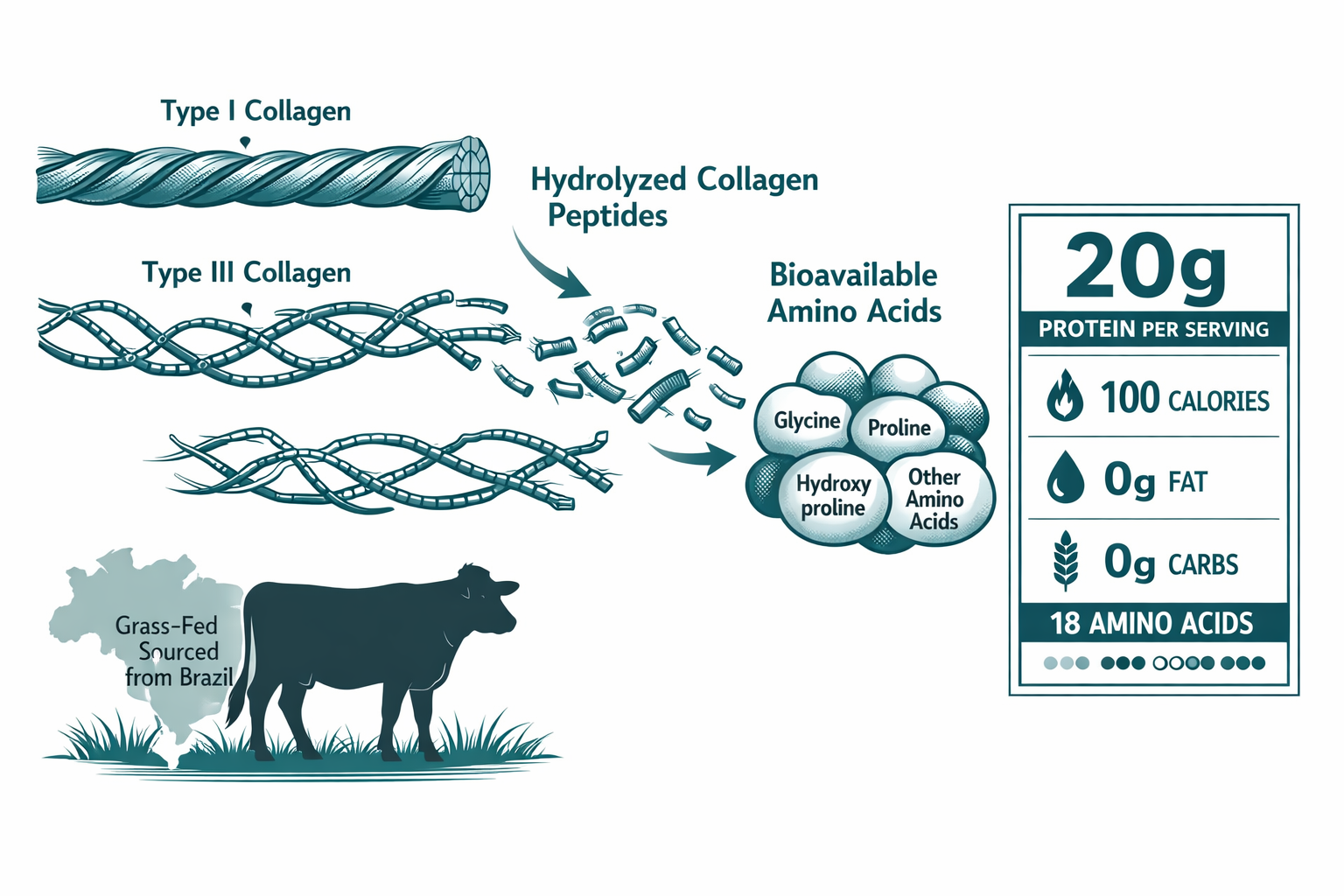
Vital Proteins sources its bovine collagen from grass-fed, pasture-raised cattle in Brazil, meeting specific standards for animal welfare and sustainability. [2] The raw collagen is then processed through hydrolysis — a chemical or enzymatic process that cleaves the long collagen protein chains into shorter peptide fragments.
Why hydrolysis matters:
Intact collagen molecules are too large to pass efficiently through the intestinal wall. Hydrolysis produces smaller peptide chains that the body can absorb more readily. Vital Proteins claims their specific hydrolysis process creates peptides the body recognises and absorbs more efficiently, and there is research indicating that smaller peptide chains do absorb better, though the degree of benefit varies between individuals. [2]
The resulting powder is then lyophilized (freeze-dried) to preserve stability before packaging.
Collagen types explained:
| Collagen Type | Primary Role | Found In Vital Proteins? |
|---|---|---|
| Type I | Skin, hair, nails, bones, tendons | ✅ Yes |
| Type III | Skin elasticity, blood vessels | ✅ Yes |
| Type II | Cartilage, joint cushioning | ❌ No |
For researchers interested in the broader science of peptide structure and bioavailability, it is worth noting that the peptide science underlying collagen supplementation shares conceptual ground with the wider field of peptide research — though laboratory-grade peptides used in scientific settings are produced under far stricter purity and quality controls. Platforms like Peptide Pro supply research-grade compounds for scientific investigation, which is a distinctly different category from consumer collagen supplements.
What Does the Nutritional Profile of Vital Protein Collagen Peptides Look Like?
Each serving of Vital Proteins Collagen Peptides delivers a straightforward nutritional profile with no surprises. [2]
Per serving (approximately one scoop, ~20g):
- Calories: 70
- Total protein: 18 grams
- Collagen protein: 20 grams
- Total carbohydrates: 0 grams
- Sugar: 0 grams
- Fat: 0 grams
The slight discrepancy between total protein (18g) and collagen protein (20g) reflects the way collagen protein is measured — collagen contains hydroxyproline, an amino acid not counted in standard protein assays. [2]
Amino acid profile note: Collagen is not a complete protein. It lacks tryptophan, meaning it should not be used as a sole protein source. The primary amino acids are glycine, proline, and hydroxyproline — which are specifically relevant to connective tissue synthesis rather than muscle protein synthesis.
Choose this product if: The goal is targeted support for skin, hair, nails, or joint connective tissue.
Choose a different protein source if: The goal is muscle protein synthesis or meeting daily essential amino acid requirements.
What Results Can Be Expected From Vital Protein Collagen Peptides, and When?
Based on user-reported timelines, different tissues respond at different rates. [2] Managing expectations is important because many people discontinue use before the relevant timeframe for their target outcome has elapsed.
Reported results timeline: [2]
- Week 3: Nail strength and growth improvements are often the first noticeable change
- Weeks 4–8: Joint comfort and mobility may begin to improve
- Week 12: Skin hydration and elasticity changes become more apparent
- ~6 months: Hair thickness and quality improvements, which take the longest to manifest
These timelines are based on user reports rather than controlled clinical data specific to this product. Individual results will vary based on age, baseline collagen levels, diet, and consistency of use.
Common mistake: Expecting visible skin changes within two to three weeks. Skin collagen turnover is slow, and twelve weeks is considered the minimum meaningful assessment period. [2]
Edge case: People with diets already high in glycine and proline (from bone broth, organ meats, or similar sources) may notice smaller incremental benefits compared to those with low baseline collagen amino acid intake.
How Do Vital Protein Collagen Peptides Compare to Other Collagen Supplements?
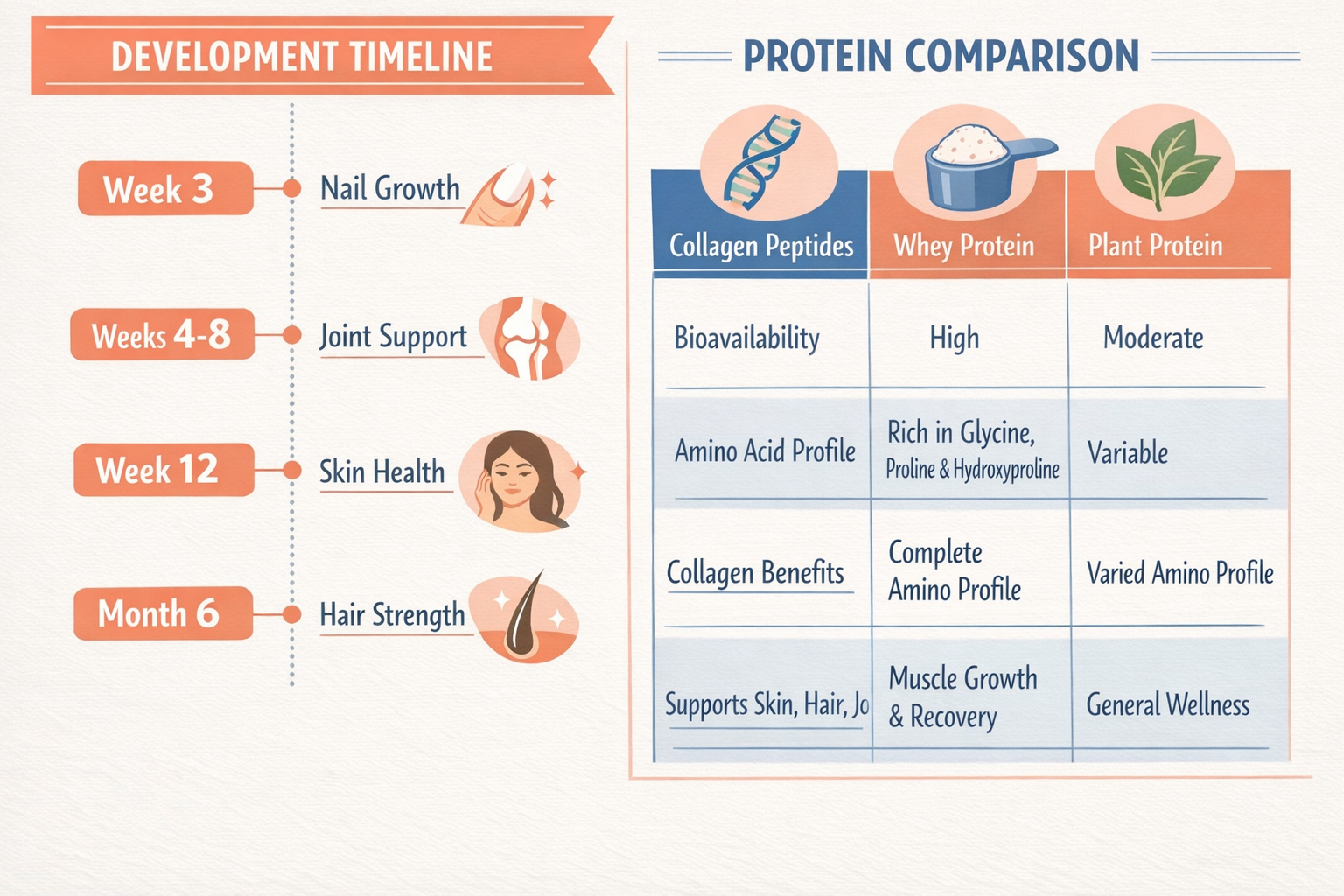
The collagen supplement market is crowded. Understanding where vital protein collagen peptides sit relative to alternatives helps in making an informed choice.
Vital Proteins vs. key competitors:
| Feature | Vital Proteins | Generic Bovine Collagen | Marine Collagen | Plant-Based “Collagen Booster” |
|---|---|---|---|---|
| Collagen source | Grass-fed bovine (Brazil) | Variable | Fish skin/scales | No actual collagen |
| Types included | I & III | I & III (typically) | I | N/A |
| Hyaluronic acid | ✅ Included | Rarely | Sometimes | Sometimes |
| Ingredient transparency | High (2 ingredients) | Variable | Variable | Variable |
| Flavour options | Unflavored + flavoured | Mostly unflavored | Unflavored | Variable |
| Price per serving | Mid-to-premium | Lower | Higher | Variable |
Marine collagen is often cited as having a smaller average peptide size, which some researchers suggest may improve absorption further — though the practical difference in outcomes for most users is not clearly established.
Plant-based “collagen boosters” do not contain collagen at all. They provide precursor nutrients (vitamin C, zinc, silica) intended to support the body’s own collagen synthesis. These are a different product category entirely.
Choose Vital Proteins if: Sourcing transparency, minimal ingredients, and brand trust matter alongside the nutritional profile.
What Is the Science Behind Collagen Peptide Absorption?
The core claim of any hydrolyzed collagen product is that smaller peptide chains are absorbed more efficiently than intact protein. This is supported by general peptide absorption science, though the specific mechanisms are worth understanding. [2]
How absorption works:
- Hydrolyzed collagen peptides enter the small intestine
- Smaller dipeptides and tripeptides (particularly Pro-Hyp and Hyp-Gly sequences) are absorbed via specific peptide transporters
- These peptides enter circulation and are distributed to target tissues including skin, cartilage, and bone
- Local cells (fibroblasts, chondrocytes) may use these peptides as signals to upregulate collagen synthesis
The signalling hypothesis — that collagen peptides act as biological signals rather than just raw building blocks — is an active area of research. It is not yet fully established, but it provides a plausible mechanism beyond simple amino acid delivery.
What the research does and does not show:
- Hydrolyzed collagen peptides do appear in circulation after oral ingestion (demonstrated in human studies)
- Whether circulating peptides meaningfully increase collagen deposition in specific tissues at typical supplement doses is still being investigated
- Results from industry-funded studies should be interpreted with appropriate caution
For those interested in the broader science of peptide bioavailability and research applications, resources on peptide reconstitution and storage principles provide useful context on how peptide stability and handling affect biological activity — principles that apply across both research and commercial peptide products.
How Much Do Vital Protein Collagen Peptides Cost, and Where Can They Be Bought?
At standard retail pricing, ongoing use of vital protein collagen peptides represents a meaningful recurring cost. [2]
Cost overview:
- Premium pricing can reach over $300 every six months for consistent daily use [2]
- Subscribing through the official Vital Proteins website offers approximately 15% savings compared to one-time purchases [3]
- Bulk purchasing through retailers like Costco or Amazon often provides better per-ounce value, particularly for the 20oz unflavored tub [1]
Where to buy:
- Vital Proteins official website (vitalproteins.com) — subscription discounts available [3]
- Amazon — competitive pricing, frequent deals
- Costco — bulk format, strong value per ounce [1]
- Whole Foods, Target, Walmart — convenient but typically full retail price
- International shipping — demand from markets including China has grown, with specialist forwarding services facilitating cross-border purchases for consumers seeking US-manufactured quality [1]
Practical tip: The unflavored format offers the best versatility and is typically the most cost-effective option per gram of collagen protein.
What Are the Brand Credentials and Market Position of Vital Proteins?
Vital Proteins positions itself as “America’s #1 collagen brand” and has built significant market presence since its founding. [4]
In August 2025, the brand was named the Official Collagen Partner of the U.S. Open and launched a new Collagen & Protein Shake product — described as a first-of-its-kind innovation for the brand. [4] The launch addressed a notable gap in the market: only 9% of new collagen-containing product launches between May 2020 and April 2025 were in nutritional or meal replacement drink format. [4]
The brand has also attracted significant investment, which has supported retail expansion and product development. [6]
Brand strengths:
- High ingredient transparency
- Established sourcing standards (grass-fed, pasture-raised) [2]
- Wide retail distribution
- Active product innovation [4]
Brand limitations to consider:
- Premium pricing compared to generic alternatives
- Limited independent third-party testing data publicly available
- Type II collagen absent from core product [2]
Is There a Difference Between Vital Protein Collagen Peptides and Research-Grade Peptides?
Yes — and this distinction matters. Vital Proteins Collagen Peptides is a consumer dietary supplement. Research-grade peptides are a fundamentally different category.
Key differences:
| Feature | Vital Proteins Collagen Peptides | Research-Grade Peptides |
|---|---|---|
| Intended use | Dietary supplement for general wellness | Scientific research only |
| Purity standards | Food-grade manufacturing | Pharmaceutical/laboratory-grade (e.g., >98% purity) |
| Regulatory category | Supplement (FDA, FSA oversight) | Research compound (not for human consumption) |
| Certificate of Analysis | Not typically published per batch | Standard requirement |
| Examples | Bovine collagen powder | BPC-157, TB-500, GHK-Cu, Epithalon |
Research-grade peptides — such as those available through specialist suppliers like Peptide Pro — are produced under strict quality conditions, supplied with Certificates of Analysis, and are strictly for laboratory research use only. They are not dietary supplements and are not intended for human consumption.
For researchers investigating collagen-related biology, compounds such as GHK-Cu (a copper peptide with documented roles in tissue remodelling research), BPC-157 (studied for its effects on connective tissue repair), or TB-500 (investigated in the context of tissue regeneration) represent a distinct category of peptide science with different applications, purity requirements, and regulatory frameworks.
Confusing consumer collagen supplements with research peptides is a common error. They share the word “peptide” but differ in purity, application, regulatory status, and scientific context.
Frequently Asked Questions About Vital Protein Collagen Peptides
Q: Can vital protein collagen peptides be mixed into hot drinks?
Yes. The hydrolyzed powder dissolves in both hot and cold liquids without clumping, making it compatible with coffee, tea, or warm water. Heat does not significantly degrade hydrolyzed collagen peptides.
Q: Is the product suitable for people following a paleo or keto diet?
Yes. The unflavored version contains zero carbohydrates and zero sugar, and the bovine sourcing is consistent with paleo dietary frameworks. [2]
Q: Does vital protein collagen peptides contain any allergens?
The product is derived from bovine (cow) sources. It is not suitable for those with beef allergies. It is typically free from gluten, dairy, and soy, but individuals with specific allergies should verify the current label as formulations can change.
Q: Why does the product contain hyaluronic acid?
Hyaluronic acid is a naturally occurring molecule that supports skin hydration and joint lubrication. Its inclusion complements the collagen peptides for skin and joint-focused applications. [2]
Q: Can vital protein collagen peptides replace a complete protein supplement?
No. Collagen is not a complete protein — it lacks tryptophan. It should supplement, not replace, complete protein sources in the diet.
Q: Is there a vegan version of vital protein collagen peptides?
Vital Proteins does not offer a vegan collagen product, as collagen is an animal-derived protein. The brand does offer plant-based products separately, but these are collagen boosters (precursor nutrients), not collagen itself.
Q: How should the powder be stored?
Store in a cool, dry place away from direct sunlight. Once opened, ensure the lid is sealed tightly after each use to prevent moisture absorption, which can affect powder texture and quality.
Q: Is vital protein collagen peptides third-party tested?
Vital Proteins states its products are manufactured in NSF-certified facilities, but independent per-batch third-party testing data is not consistently published publicly. Consumers seeking maximum transparency should check the current product label and brand communications.
Q: How does the international buying process work for markets like China?
Health-conscious consumers in China increasingly use specialist forwarding services to purchase US-manufactured vital protein collagen peptides, citing superior quality control and competitive price-per-ounce ratios compared to locally available alternatives. [1]
Q: Are research-grade peptides related to collagen supplements?
They share the term “peptide” but are different products. Research-grade peptides like those supplied by Peptide Pro are high-purity compounds for laboratory use only, produced under strict quality conditions. Consumer collagen supplements are food-grade products for general wellness use.
Q: What is the best time of day to take collagen peptides?
There is no strong evidence that timing significantly affects outcomes. Consistency of daily intake matters more than the specific time of day.
Q: Can collagen peptides interact with medications?
Collagen peptides are generally considered safe for most adults. However, individuals on specific medications or with underlying health conditions should consult a healthcare professional before starting any supplement.
Conclusion
Vital protein collagen peptides occupy a well-defined space in the consumer supplement market: a minimal-ingredient, transparent, bovine-derived collagen product with a clear nutritional profile and documented sourcing standards. [2] The product delivers Type I and Type III collagen at 20 grams per serving, with hyaluronic acid as the only additional active ingredient, and no unnecessary fillers. [2]
Results require patience — nails respond fastest, skin and joints take weeks to months, and hair improvements can take up to six months of consistent use. [2] The cost is meaningful at premium pricing, but subscription and bulk purchasing options reduce the per-serving expense. [2] [3]
For anyone researching collagen science more broadly, it is worth understanding the clear distinction between consumer collagen supplements and research-grade peptides. Compounds like GHK-Cu, BPC-157, and TB-500 are studied in laboratory settings for their roles in tissue biology — a separate discipline from dietary supplementation, with different purity standards, regulatory frameworks, and research applications. Suppliers like Peptide Pro serve that research community with high-purity, research-grade compounds supplied strictly for scientific use.
Actionable next steps:
- Assess whether Type I/III collagen (skin, hair, nails, joints) or Type II collagen (cartilage) is the relevant target before purchasing
- Use the subscription option on the official brand site to reduce ongoing costs [3]
- Commit to a minimum 12-week trial period before evaluating skin-related results [2]
- For research applications involving peptide science, explore the Peptide Pro research catalogue for laboratory-grade compounds with full COAs and same-day UK dispatch
References
[1] The 2026 Plan For Getting Vital Proteins Collagen Peptides To China Without Order Cancellations – https://www.comgateway.com/blogs/the-2026-plan-for-getting-vital-proteins-collagen-peptides-to-china-without-order-cancellations/
[2] Vital Proteins Collagen Peptides Review – https://shop.athleticinsight.com/blogs/reviews/vital-proteins-collagen-peptides-review
[3] Vital Proteins Official Website – https://www.vitalproteins.com
[4] Vital Proteins Serves Up Collagen At The US Open – https://www.nutraingredients.com/Article/2025/08/29/vital-proteins-serves-up-collagen-at-the-us-open/
[6] $19m Investment From CAVU Strengthens Vital Proteins As It Expands In Retail – https://www.newhope.com/investments/-19m-investment-from-cavu-strengthens-vital-proteins-as-it-expands-in-retail
Tags: vital protein collagen peptides, collagen peptides, hydrolyzed collagen, bovine collagen, Type I collagen, Type III collagen, collagen supplement review, collagen bioavailability, research peptides, GHK-Cu, BPC-157, peptide science