Last updated: March 25, 2026
Quick Answer: Seeing a dermatologist to remove moles is the safest, most reliable option when a mole changes in size, shape, or colour, causes discomfort, or simply bothers you cosmetically. A trained physician can assess whether a mole is benign or concerning, choose the right removal technique, and send tissue for pathology if needed. Most procedures take under 30 minutes in an outpatient setting.
Key Takeaways
- Any mole that changes — in shape, colour, size, or texture — deserves a professional evaluation before removal.
- Dermatologists and minor surgery specialists use several techniques: surgical excision, shave excision, and in some cases laser treatment.
- Mole removal in an outpatient clinic is typically quick, low-risk, and requires minimal recovery time.
- Over 112,000 Americans are estimated to be diagnosed with invasive melanoma in 2026 alone [1] — early removal and pathology testing matter.
- Cosmetic mole removal (for moles that aren't medically concerning) is widely available but is generally not covered by provincial health insurance in Ontario.
- DIY removal methods — creams, pens, home kits — are not recommended and can mask dangerous changes or cause scarring.
- Cost in Canada varies depending on mole size, location, and technique; using a cost estimator tool before booking helps set expectations.
- Seeing a qualified surgeon at a dedicated minor surgery clinic offers faster access than a hospital and a more personalised experience than a walk-in clinic.
What Does a Dermatologist Actually Do When Removing a Mole?
A dermatologist or minor surgery specialist evaluates the mole first, then chooses the most appropriate removal technique based on the mole's size, depth, location, and whether it looks suspicious.
The process typically follows these steps:
- Visual and dermoscopic assessment — The physician examines the mole with a dermatoscope (a magnifying tool with polarised light). Dermatoscope usage in primary care has increased by 40% since 2015 [5], making early detection far more accurate.
- Discussion of options — You'll talk through whether the mole needs to come off for medical or cosmetic reasons, and which technique suits your skin type and the mole's characteristics.
- Local anaesthetic — A small injection numbs the area. Most patients feel a brief sting, then nothing.
- Removal — The surgeon removes the mole using the chosen method (see the next section for details).
- Wound closure — Depending on the technique, the site may be sutured, cauterised, or left to heal naturally.
- Pathology — For any mole that looks atypical, the tissue is sent to a lab for analysis. This is a critical safety step.
The whole appointment, from assessment to bandaging, often takes 20 to 45 minutes.
"Think of mole removal like fixing a small crack in a wall — done properly by the right person, it's quick, clean, and leaves almost nothing behind. Done wrong, it creates a bigger problem."
How Do You Know If a Mole Needs to Be Removed?
Not every mole needs to come off. But certain signs make it worth seeing a dermatologist to remove moles sooner rather than later.
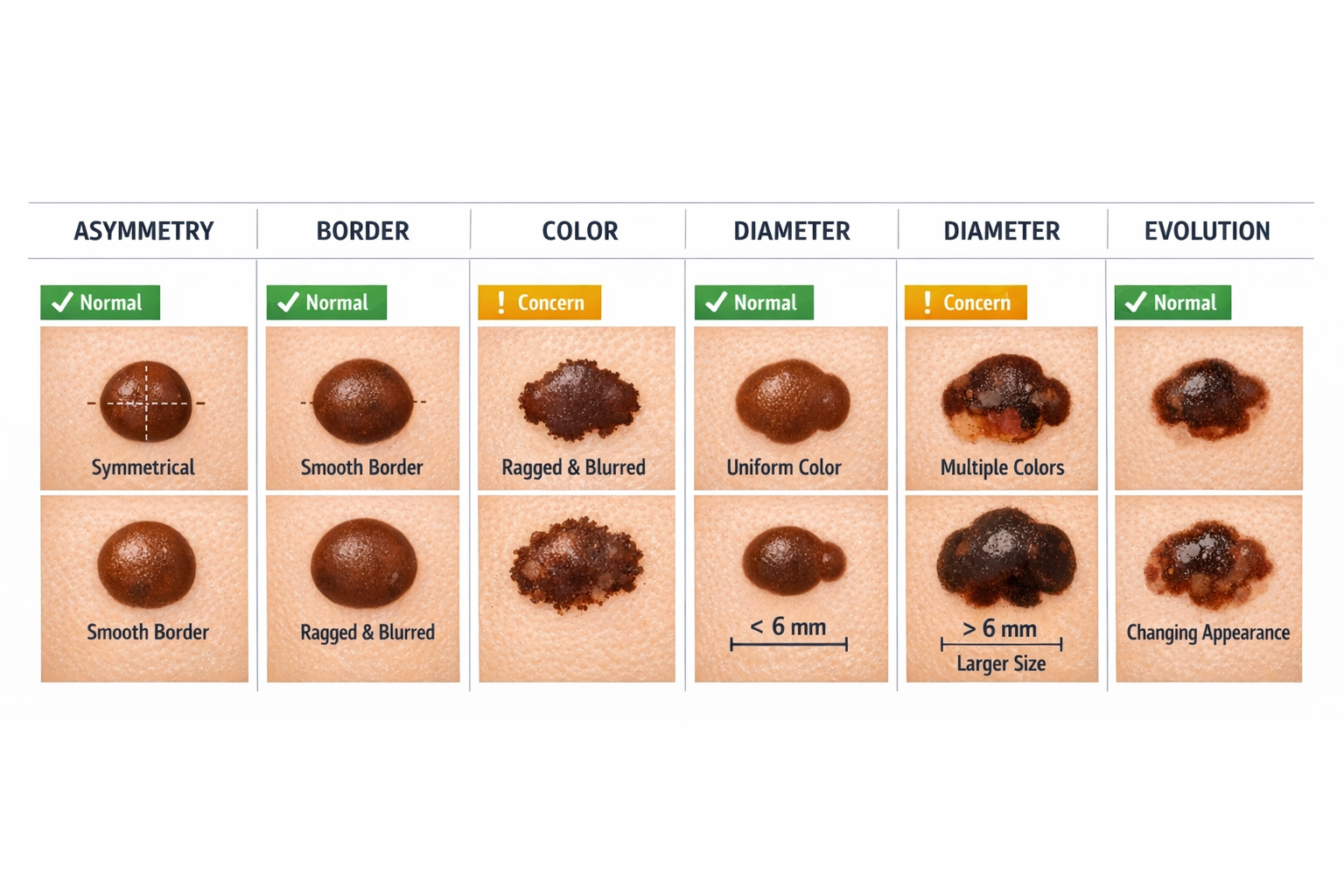
Use the ABCDE rule as your starting checklist:
| Letter | What to Look For | Why It Matters |
|---|---|---|
| A — Asymmetry | One half doesn't match the other | Irregular growth pattern |
| B — Border | Ragged, notched, or blurred edges | May signal abnormal cell activity |
| C — Colour | Multiple shades of brown, black, red, or white | Uneven pigmentation is a warning sign |
| D — Diameter | Larger than 6mm (about the size of a pencil eraser) | Larger moles warrant closer review |
| E — Evolution | Any change over weeks or months | Change is the most important signal |
Other reasons to book an appointment:
- The mole bleeds, itches, or crusts without injury
- It sits in a spot that gets constant friction (waistband, bra strap, collar)
- You simply don't like the way it looks and want it gone
- You have a family history of melanoma or many atypical moles
Melanoma diagnoses are projected to rise in 2026 [3], which makes regular self-checks and professional evaluations more important than ever. If you're unsure whether your mole qualifies, our complete guide to benign moles explains what normal looks like.
What Are the Main Methods a Dermatologist Uses to Remove Moles?
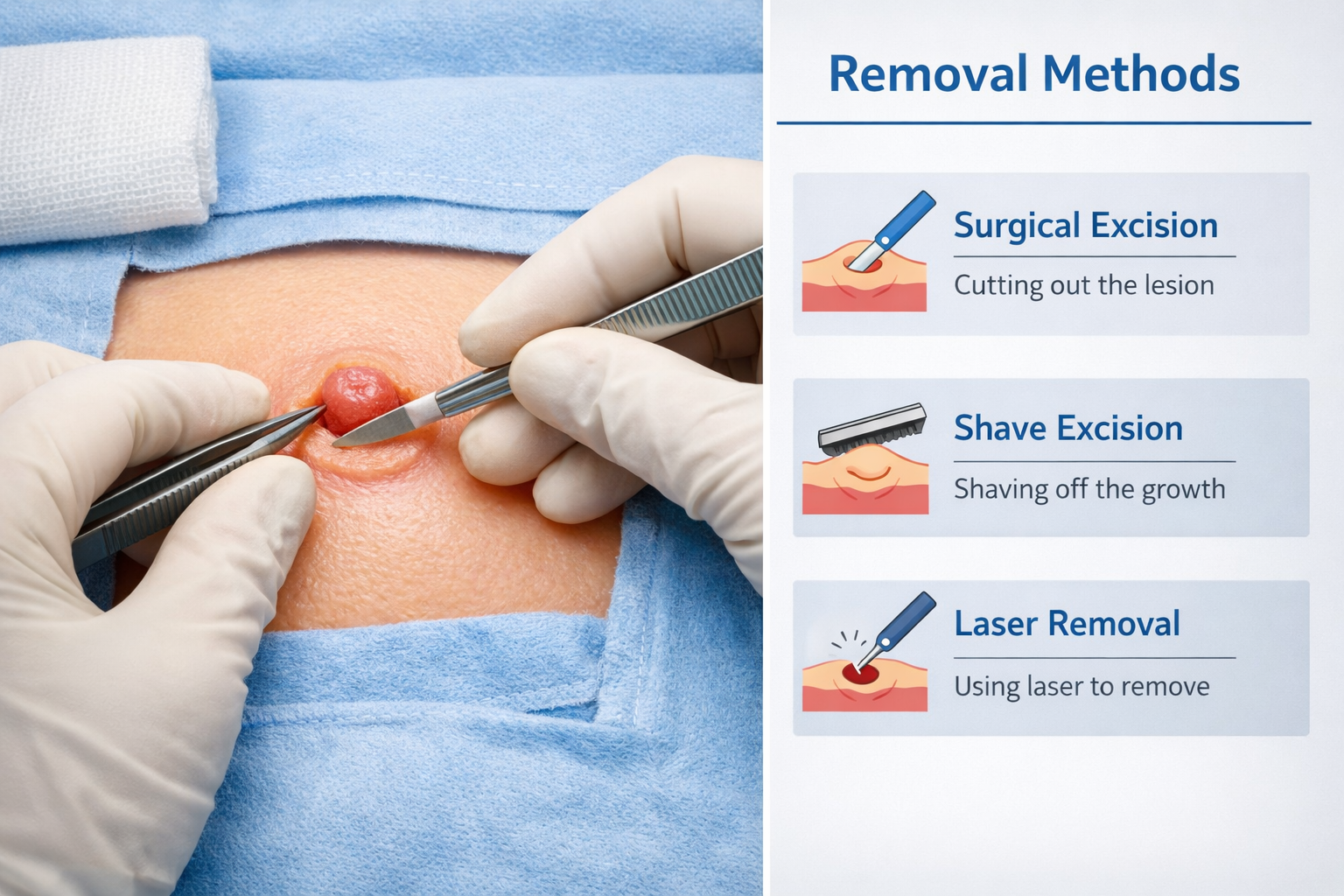
There are three primary techniques a dermatologist or surgeon uses to remove moles. The right choice depends on the mole's depth, size, and whether pathology testing is needed.
1. Surgical Excision (Cut and Suture)
The surgeon cuts out the entire mole plus a small margin of surrounding skin, then closes the wound with sutures.
- Best for: Deeper moles, suspicious or atypical moles, moles that need full pathology
- Leaves: A small linear scar that fades over time
- Recovery: Sutures out in 7–14 days; normal activity resumes quickly
2. Shave Excision
The surgeon uses a fine blade to shave the mole flush with the skin surface. No sutures needed.
- Best for: Raised, benign moles; cosmetic removal
- Leaves: A small flat mark that typically fades well
- Recovery: Heals in 1–2 weeks; minimal downtime
3. Laser Removal
A focused laser beam breaks down pigment in the mole.
- Best for: Flat, small, pigmented benign moles in cosmetically sensitive areas
- Limitation: No tissue sample for pathology — so it's only appropriate when the mole has been confirmed benign
- Recovery: Mild redness for a few days
Choose surgical excision if the mole has any atypical features or if your doctor wants a pathology report. Choose shave excision or laser if the mole is confirmed benign and cosmetic outcome is the priority.
For a deeper look at flat mole removal options, including which technique works best by mole type, that guide covers the specifics well.
Is It Safe to Have a Mole Removed? What Are the Risks?
Mole removal by a qualified surgeon is very safe. Serious complications are uncommon when the procedure is performed in a proper clinical setting with sterile technique.
Common, minor side effects:
- Mild bruising or swelling around the site (resolves in days)
- Temporary redness
- A small scar — size and visibility depend on technique and location
Less common risks:
- Infection (minimised with proper aftercare)
- Scarring beyond the expected amount, particularly on the chest or shoulders
- Incomplete removal, which may require a second procedure
One concern patients often raise: does removing a mole cause cancer? The short answer is no. Our detailed post on whether removing a mole causes cancer addresses this directly — but the key point is that proper surgical excision with clear margins removes the concern, not creates one.
Edge case to know: If a mole is incompletely removed (especially with DIY methods or under-qualified providers), residual cells can regrow. This is why full excision with margin confirmation matters. Learn more about whether moles grow back after removal.
How Much Does It Cost to See a Dermatologist to Remove Moles in Ontario?
Cost depends on several factors: the number of moles, the technique used, and whether the removal is medically necessary or cosmetic.
General cost ranges in Ontario (2026 estimates):
| Removal Type | Estimated Cost Range |
|---|---|
| Single mole, shave excision | $150 – $350 |
| Single mole, surgical excision | $250 – $500 |
| Multiple moles (same visit) | Discounted per additional mole |
| Pathology fee (if sent to lab) | $50 – $150 additional |
OHIP coverage: Medically necessary mole removal (where a physician documents clinical concern) may be covered under OHIP. Cosmetic removal is not covered and is paid out of pocket.
Common mistake: Patients sometimes assume that because a GP referred them, the cost is covered. Always confirm with the clinic before your appointment whether the procedure qualifies for provincial coverage.
To get a personalised estimate before you book, use The Minor Surgery Center's free cost estimator tool — it calculates based on your specific situation.
If you're wondering whether you can have multiple moles removed in one visit to save time and cost, the answer is often yes — this guide explains how multiple mole removal works in a single appointment.
Dermatologist vs. Minor Surgery Clinic: Which Should You Choose to Remove Moles?
Both dermatologists and minor surgery specialists are qualified to remove moles. The right choice depends on your situation.
| Factor | Dermatologist | Minor Surgery Clinic |
|---|---|---|
| Wait times | Often 3–6 months in Ontario | Typically days to weeks |
| Scope | Diagnosis + treatment | Focused on efficient removal |
| Pathology | Yes | Yes (sent to external lab) |
| Cosmetic cases | Yes | Yes |
| Cost (cosmetic) | Similar range | Transparent, upfront pricing |
| Personal attention | Varies by practice | Typically high, smaller setting |
Choose a dermatologist if you have complex skin conditions alongside the mole, or if you need a full skin cancer screening as part of the visit.
Choose a minor surgery clinic if you've already had the mole assessed, want faster access, prefer a focused outpatient experience, and want expert outpatient care without navigating a hospital system.
At The Minor Surgery Center, an experienced surgical team performs mole removals across multiple Ontario locations — with a comfort-first approach and clear communication from the moment you book. You can find your nearest location in Toronto, Mississauga, Oakville, Markham, and Newmarket, among others.
What Happens After Mole Removal? Recovery and Aftercare
Recovery from mole removal is straightforward for most patients. The goal is to keep the site clean, protected, and out of direct sun while it heals.
First 48 hours:
- Keep the bandage on and the area dry
- Mild discomfort is normal; over-the-counter pain relief is usually sufficient
- Avoid strenuous activity that causes sweating near the site
Days 3–14:
- Clean gently with mild soap and water
- Apply petroleum jelly or prescribed ointment to keep the area moist
- Avoid picking, scratching, or submerging in water (pools, hot tubs)
- If sutures are present, protect them from tension
Long-term (weeks to months):
- Apply SPF 30+ sunscreen to the healed area — UV exposure can darken scars
- Scars typically fade significantly within 6–12 months
- Raised or thickened scars (hypertrophic or keloid) are uncommon but treatable if they develop
When to call the clinic:
- Increasing redness, warmth, or swelling after day 3
- Discharge that is yellow or has an odour
- Fever
- Sutures that open or the wound edges separate
How Is Mole Mapping and AI Changing How Moles Are Monitored?
Technology is making it easier to track moles over time and catch changes early — before removal even becomes necessary.
3D body mapping uses full-body photography to create a detailed baseline image of every mole on your skin. Clinicians can then compare images at follow-up visits to detect subtle changes. This technology has been shown to reduce biopsy rates by up to 50% [5] by helping clinicians distinguish moles that are stable from those that need action.
AI-assisted dermoscopy can now detect melanoma with over 90% accuracy [5], supporting clinicians in identifying which moles warrant removal or closer monitoring. This doesn't replace clinical judgment — it sharpens it.
What this means for patients: If you have many moles or a personal or family history of melanoma, asking about mole mapping at your next appointment is worthwhile. Our guide to the best mole mapping clinics in Toronto covers what to expect and what it costs.
Melanoma is the deadliest form of skin cancer, and early detection is the single biggest factor in survival outcomes [6]. With 112,000+ invasive melanoma diagnoses projected in the US in 2026 [1], the case for proactive monitoring has never been stronger.
What Should You Avoid Before Seeing a Dermatologist to Remove Moles?
Several common mistakes can complicate mole removal or delay accurate diagnosis. Avoiding them makes the whole process smoother.
Don't try to remove the mole yourself. At-home creams, mole removal pens, and DIY methods are not safe or effective for true moles. They can cause scarring, infection, and — most importantly — destroy tissue needed for pathology. Our posts on whether mole removal creams work and mole removal pens explain why these shortcuts aren't worth the risk.
Don't ignore a changing mole. Waiting to see if it "goes back to normal" is one of the most common and costly delays in melanoma diagnosis.
Don't shave over a raised mole repeatedly. Repeated trauma can cause irritation and make clinical assessment harder.
Before your appointment:
- Photograph the mole monthly to track any changes
- Note when you first noticed any change
- List any medications you take (some affect bleeding or healing)
- Avoid applying lotions or makeup directly on the mole the day of your visit
Common mistake: Patients sometimes book a removal appointment without a prior assessment, assuming any clinic will do. For moles with any atypical features, always confirm the clinic sends tissue to pathology — not all cosmetic providers do.
Frequently Asked Questions
Q: Can a GP remove a mole, or do I need a specialist?
A: A GP can perform simple shave excisions for benign moles, but for deeper moles, atypical moles, or cases where pathology is needed, a dermatologist or minor surgery specialist is the better choice. Specialist training reduces the risk of incomplete removal and improves cosmetic outcomes.
Q: How long does mole removal take?
A: Most mole removals take 20 to 45 minutes from start to finish, including assessment, anaesthetic, removal, and bandaging. You can typically drive yourself home and return to desk work the same day.
Q: Will mole removal leave a scar?
A: Some scarring is expected with any skin procedure. Surgical excision leaves a small linear scar; shave excision leaves a flat mark. Both typically fade significantly over 6–12 months. Placement, skin type, and aftercare all influence the final result.
Q: Is mole removal painful?
A: The local anaesthetic injection causes a brief sting. After that, the removal itself is painless. Mild soreness for 1–3 days afterward is normal and manageable with over-the-counter pain relief.
Q: How soon will I get pathology results?
A: Pathology results typically come back within 1–2 weeks. The clinic will contact you with results and advise on next steps if anything requires follow-up.
Q: Can I have multiple moles removed in one visit?
A: Yes, in most cases. Removing several moles in one appointment saves time and can reduce overall cost. Discuss this with your surgeon at the consultation.
Q: What if my mole comes back after removal?
A: Complete surgical excision with clear margins has a very low recurrence rate. Shave excision has a slightly higher chance of regrowth if the base of the mole wasn't fully removed. If a mole reappears, it should be reassessed promptly.
Q: Is cosmetic mole removal covered by OHIP?
A: No. OHIP covers medically necessary removal (where clinical concern is documented), but cosmetic removal is an out-of-pocket expense. Costs vary by clinic and technique.
Q: How do I know if a mole is cancerous before removal?
A: No visual assessment — even with a dermatoscope — can confirm cancer with 100% certainty. Pathology (lab analysis of the removed tissue) is the only definitive test. This is why sending tissue to the lab matters for any atypical mole.
Q: What's the difference between a mole and a skin tag?
A: Moles are clusters of pigmented skin cells (melanocytes) and can be flat or raised. Skin tags are soft, flesh-coloured growths that hang off the skin on a thin stalk. They're different structures and may require different removal techniques.
Q: How do I find a qualified clinic near me in the Toronto area?
A: The Minor Surgery Center has locations across the GTA and surrounding areas. You can find a dermatologist or mole removal specialist in Toronto through their directory, or browse locations including Brampton, Scarborough, and North York.
Conclusion
Seeing a dermatologist to remove moles is one of the most straightforward, high-value things you can do for your skin health. Whether a mole is changing and needs pathology, sitting in an uncomfortable spot, or simply something you'd rather not see in the mirror every day — there's a safe, efficient solution available.
Here's what to do next:
- Check your moles today using the ABCDE rule. Photograph anything that looks different from last month.
- Book a consultation if any mole has changed, bleeds, itches, or simply concerns you. Don't wait.
- Choose the right provider — a clinic that performs pathology on removed tissue, communicates clearly, and has a track record with mole procedures.
- Use a cost estimator before you book so there are no surprises. The Minor Surgery Center's free tool gives you a personalised figure in minutes.
- Get back to your life — most patients return to normal activity the same day or the next.
At The Minor Surgery Center, a personalised treatment plan, minimally invasive solutions, and a comfort-first approach are what every patient gets — not just a quick procedure and a bandage. The team is ready when you are.
👉 View mole removal services and book a consultation
References
[1] Over 112,000 Americans Estimated To Be Diagnosed With Invasive Melanoma In 2026 – https://www.curemelanoma.org/blog/over-112-000-americans-estimated-to-be-diagnosed-with-invasive-melanoma-in-2026
[2] Melanoma Cases Projected To Increase In 2026 – https://www.visionmonday.com/eyecare/health-watch/article/melanoma-cases-projected-to-increase-in-2026
[3] Melanoma Diagnoses Projected To Rise In 2026 – https://www.managedhealthcareexecutive.com/view/melanoma-diagnoses-projected-to-rise-in-2026
[5] Dermatology Industry Statistics – https://wifitalents.com/dermatology-industry-statistics/
[6] Skin Cancer Facts – https://www.skincancer.org/skin-cancer-information/skin-cancer-facts/
Tags: dermatologist to remove moles, mole removal, mole removal Toronto, surgical mole excision, cosmetic mole removal, skin cancer prevention, ABCDE mole rule, mole removal cost Ontario, minor surgery clinic, mole mapping, atypical moles, outpatient mole removal